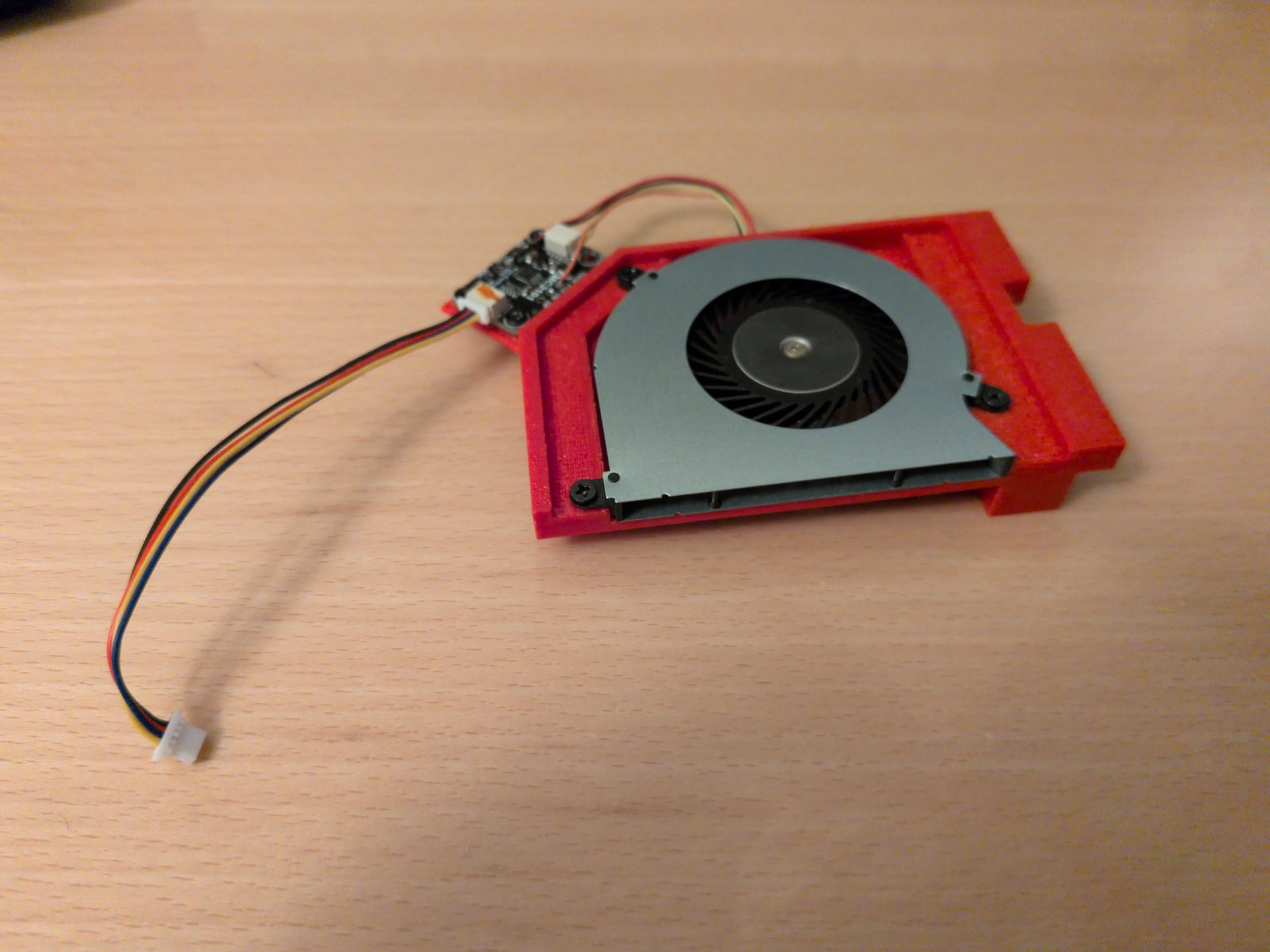
Over in the fediverse, @josch asked me to run some benchmarks. And so I did. Or one at least:
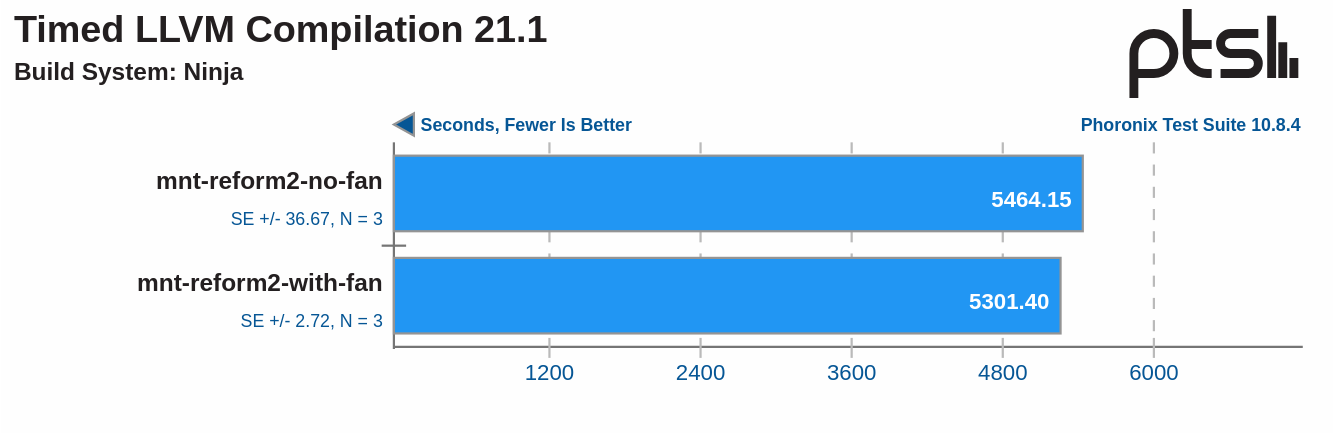
tl;dr: It only matters on long lasting loads. And even then the difference is negligible. But it helps to keep the device and components cool.
I ran a compile benchmark since that, running Gentoo, is the typical load I have on my laptop. The heat sink can soak up quite a bit of heat, so any difference will only show up on long runs.
For the test without the fan, I removed the fan entirely and taped off the holes in the bottom plate to get as close to stock as possible. The tests ran three times in direct succession. The laptop started out at about 40°C and it took about an hour to completely heat soak. After that it was 80°C and the CPU started throttling. Temperatures would fluctuate between 78°C and 83°C and depending on the exact temperatures, the CPU would some times throttle and other times it would not.
For the second run, I re-installed the fan and removed the tape. The system would get about 60°C with the fan running at 75% speed. The CPU did not throttle and you can see this in the results that are a tad bit better.
For me though, this is absolutely worth it. The device is more pleasant to touch and I feel better knowing it is not terribly hot.
Funny thing, at first I tried to run the test with the fan off but still installed. But that did not go well at all. When writing the results for the first test run, the SSD controller overheated and shut down, rendering the system useless until a reboot. That is, I guess, a thing - the mounting bracket for the fan covers the Wifi card and SSD. But when the fan is running, it also draws air over them and over all, the SSD staid cooler with the fan installed and running than it did without the fan installed at all. Without the fan installed, it spiked to over 80°C at times, but it held out well throughout the several hours of testing, so that’s good.
The fan, btw, can be removed easily. It’s a discrete unit that only needs a single plug. That was not a design goal, it just worked out that way.